




Hi there! How can we help you today?
Pump & Circulation System Services
-
Home
-
Pump & Circulation System Services

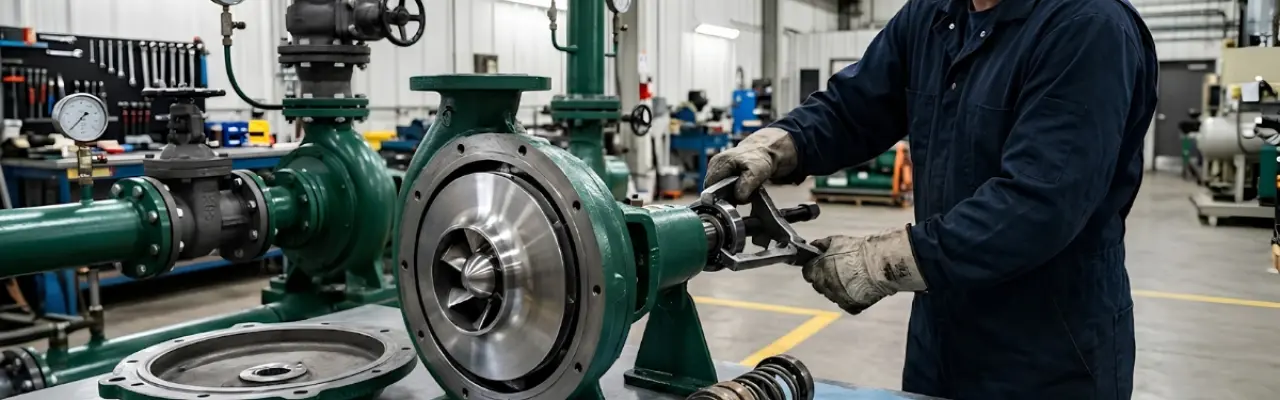

Pump & Circulation System Services
A failed circulation pump on a thermic fluid heater or steam boiler system is not just a maintenance problem — it is a safety event. Interrupted flow while the burner fires can cause rapid coil overheating, fluid cracking, and irreversible coil damage. At Dhyami Industrial Solutions, we provide comprehensive pump maintenance and circulation system services — from routine seal and bearing replacement to full pump overhaul and cavitation diagnosis — ensuring your circulation system never becomes the weakest link in your plant.
- Mechanical seal inspection & replacement,
- Bearing inspection & replacement,
- Pump-motor alignment verification,
- Impeller inspection & wear assessment,
- Suction strainer cleaning & inspection,
- Cavitation diagnosis & root cause correction
Why Pump Maintenance Cannot Be Deferred
Mechanical seal leakage, bearing noise, and cavitation are not just inconveniences — they are early warnings of imminent failure. A pump that fails during operation on a thermic fluid system can trigger a chain of consequences: interrupted flow, coil overheating, fluid cracking, and potential fire risk. Addressing these symptoms at the first sign — rather than waiting for failure — is the difference between a planned service visit and an emergency shutdown.
Mechanical Seal Replacement
High-temperature mechanical seals for thermic fluid and process pump applications — correctly rated for service temperature, properly installed, and aligned to prevent premature seal failure.
Cavitation Diagnosis & Correction
We identify the root cause of pump cavitation — insufficient NPSH, low expansion tank level, blocked suction strainer, or fluid overheating — and correct it rather than simply replacing worn parts.
Full Pump Overhaul
Complete pump disassembly, impeller inspection, wear ring measurement, bearing replacement, seal replacement, and reassembly to OEM specifications - with performance verification before return to service.
How We Work
- We begin with a full pump condition assessment — checking for seal leakage, bearing noise, vibration, cavitation symptoms, and flow performance against design specification before any dismantling.
- The suction strainer is removed and inspected — blockage or fouling at the suction is one of the most common and most overlooked causes of cavitation, reduced flow, and premature seal failure.
- The pump is dismantled and fully inspected — impeller wear rings, shaft, bearings, and mechanical seal are measured and assessed against OEM wear limits and replacement criteria.
- Worn or failed components are replaced with correctly rated parts — mechanical seals are selected specifically for the operating temperature, fluid type, and shaft size of each pump.
- Pump-to-motor alignment is verified and corrected using dial gauge or laser alignment equipment — misalignment is a leading cause of premature bearing and seal failure that is frequently overlooked.
- The pump is reassembled to OEM specifications, reinstalled, and performance-verified under operating conditions — flow, pressure, and vibration levels are confirmed before the job is closed.
- A full service report is provided — documenting condition findings, components replaced, alignment measurements, and post-service performance data.
We service centrifugal pumps, hot oil circulation pumps, boiler feed pumps, condensate return pumps, and general process pumps — covering all common pump types used in steam boiler, thermic fluid heater, and industrial process applications.
The most common indicators are visible fluid seepage or drips at the pump seal area, a gradual increase in fluid make-up rate, or a burning smell from the seal face. Early replacement is always preferable — a failed seal on a hot oil pump is a fire risk.
Cavitation is caused by insufficient Net Positive Suction Head — most commonly from a low expansion tank level, blocked suction strainer, fluid overheating at the pump inlet, or a pump running beyond its design flow range. We identify and correct the root cause — not just replace the damaged impeller.
Replacement interval depends on operating temperature, fluid type, and running hours — typically annually for high-temperature hot oil pumps, or when inspection reveals wear beyond OEM limits. Bearing and seal condition is assessed during every scheduled maintenance visit.
Yes. We supply mechanical seals, bearings, wear rings, gaskets, and all required pump spare parts — sourced for the correct temperature rating, shaft size, and fluid compatibility for your specific pump model and application.
Yes. We service pumps from all major manufacturers — working to OEM specifications for dismantling, wear limits, reassembly, and alignment. For less common pump models, we source the correct spare parts before scheduling the service visit.
Share this service: